Donna & Bambini: French Morocco and Children
Phillip Wong Photography
Editorial/Fashion
Donna & Bambini: French Morocco and Children
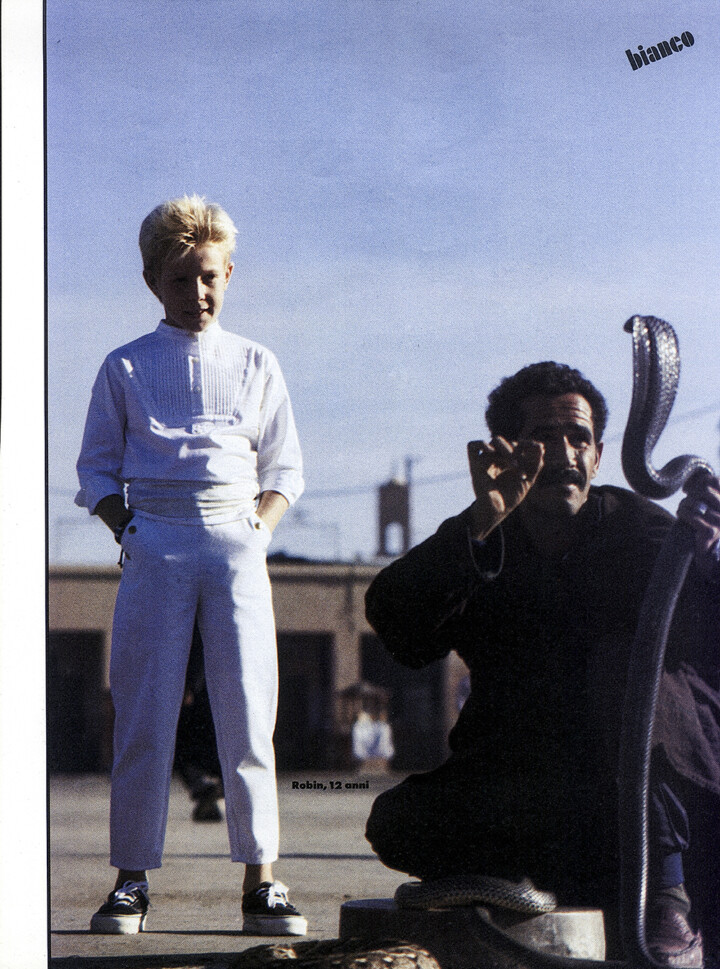
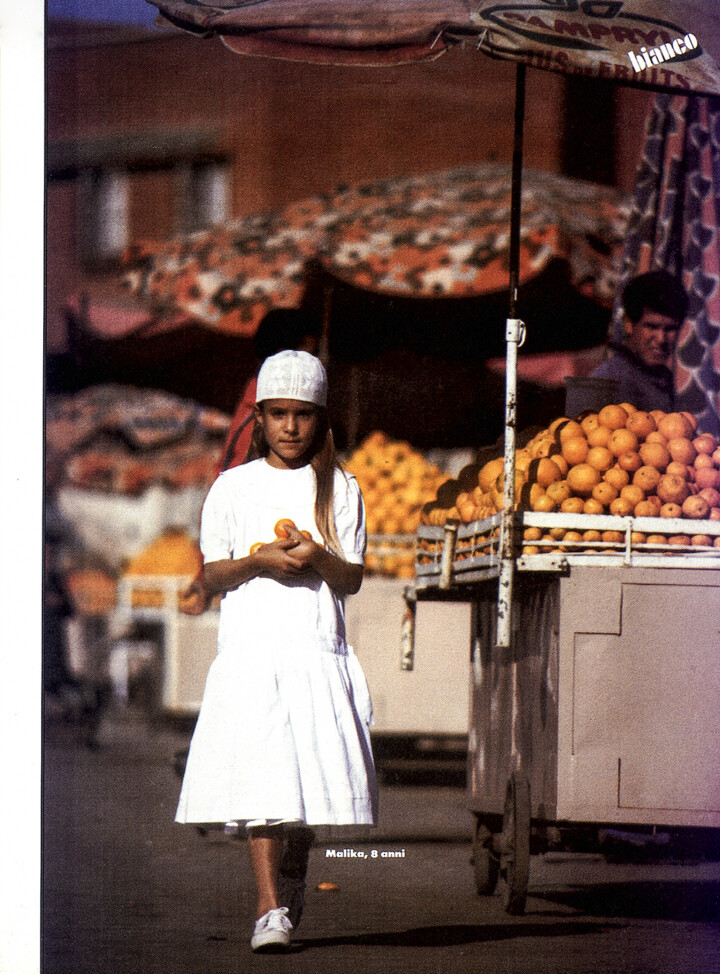
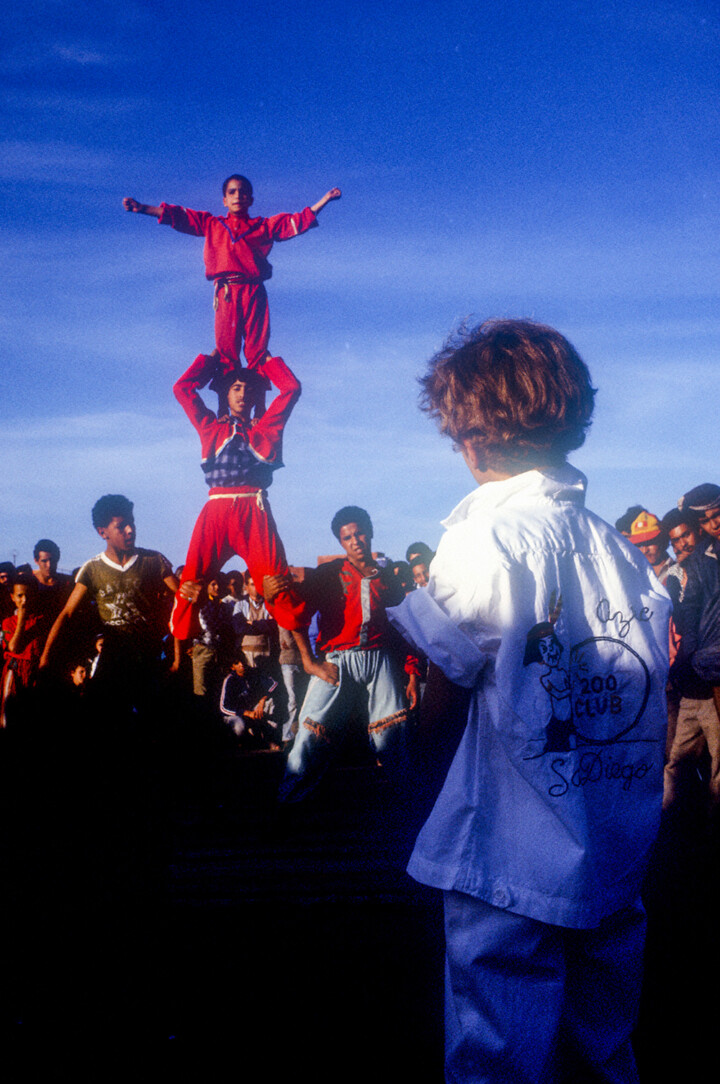
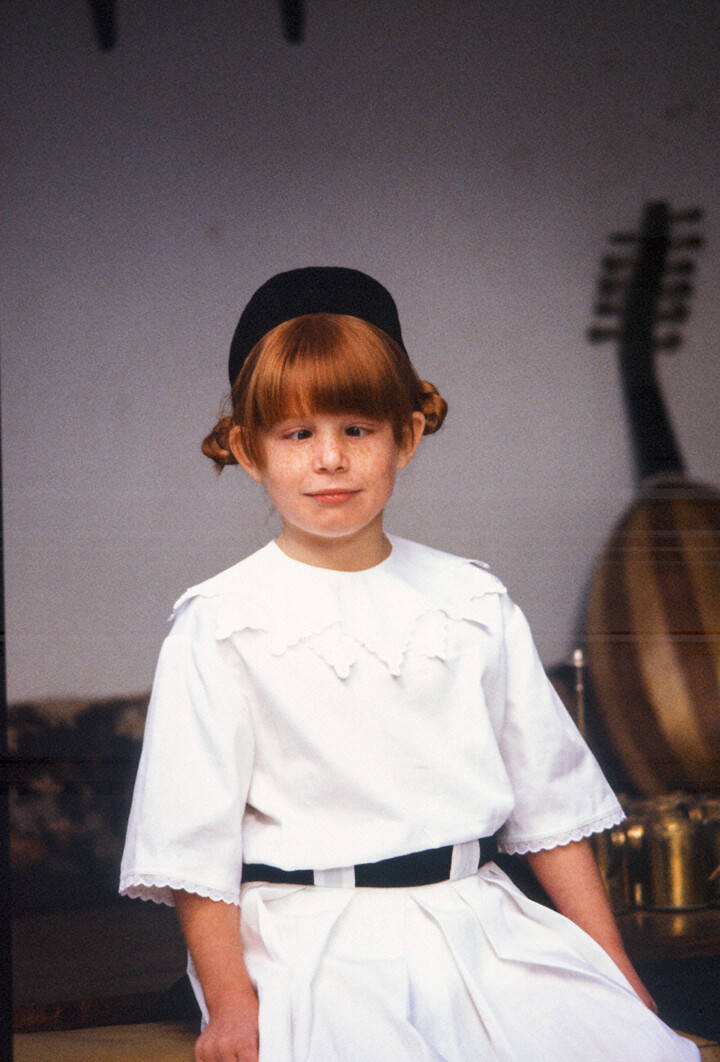
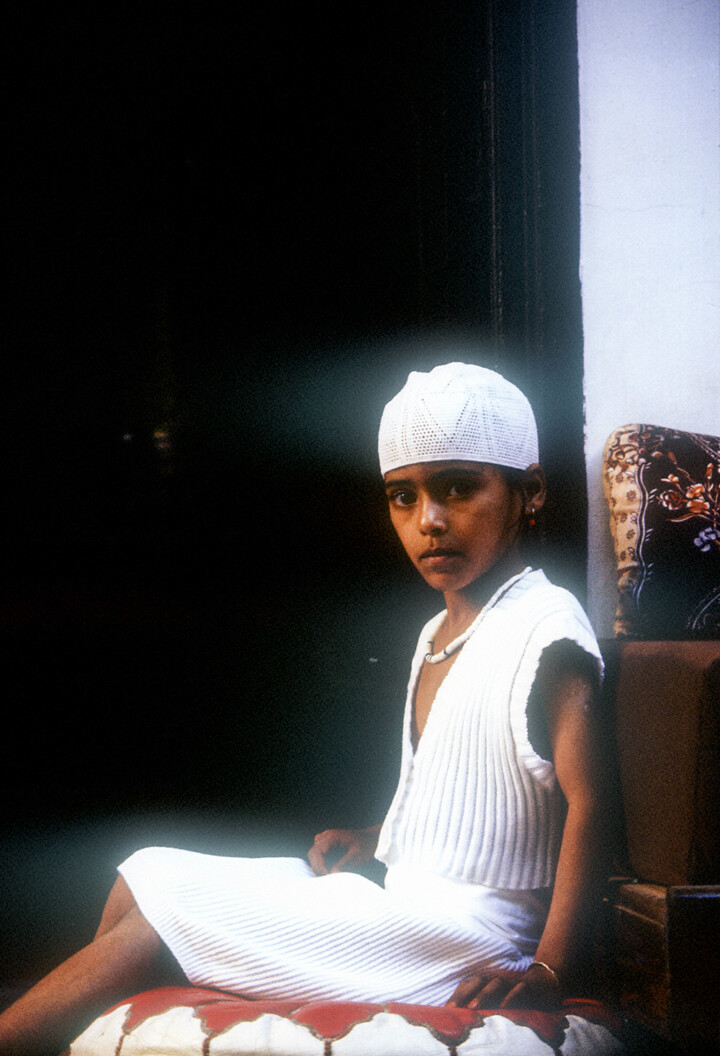
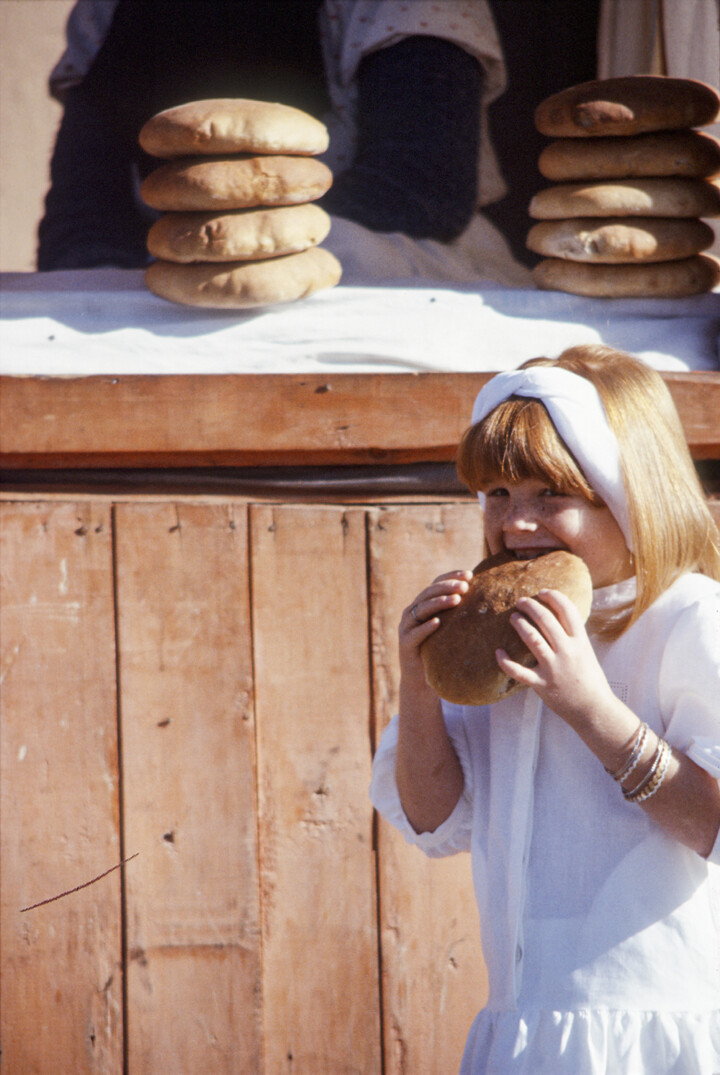
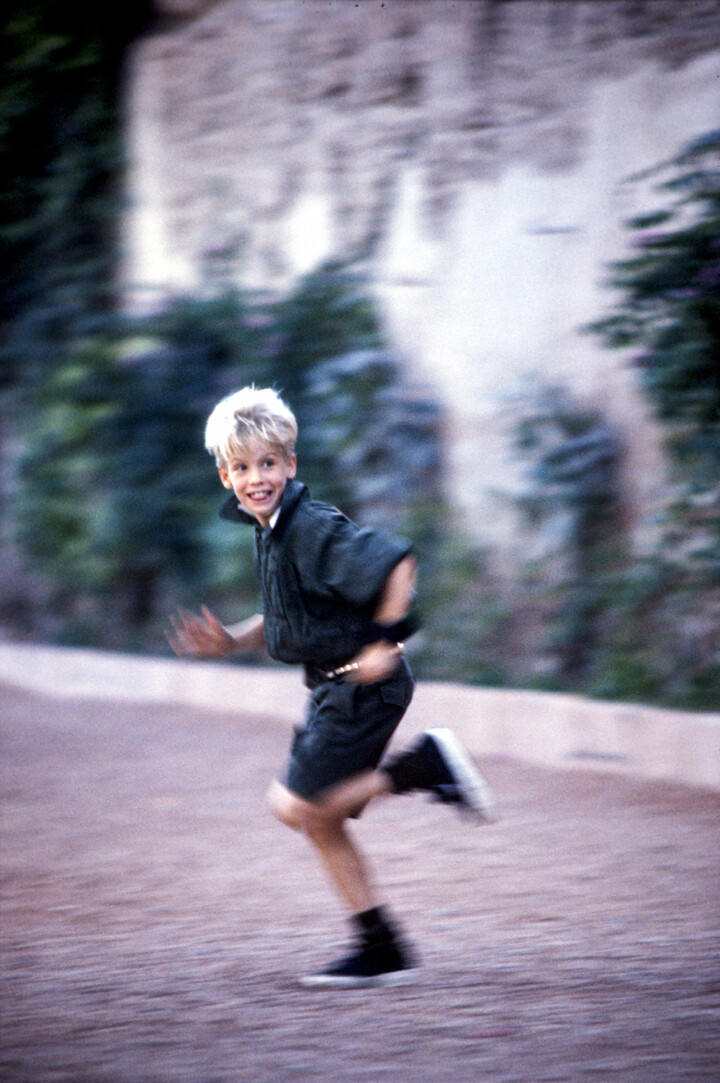
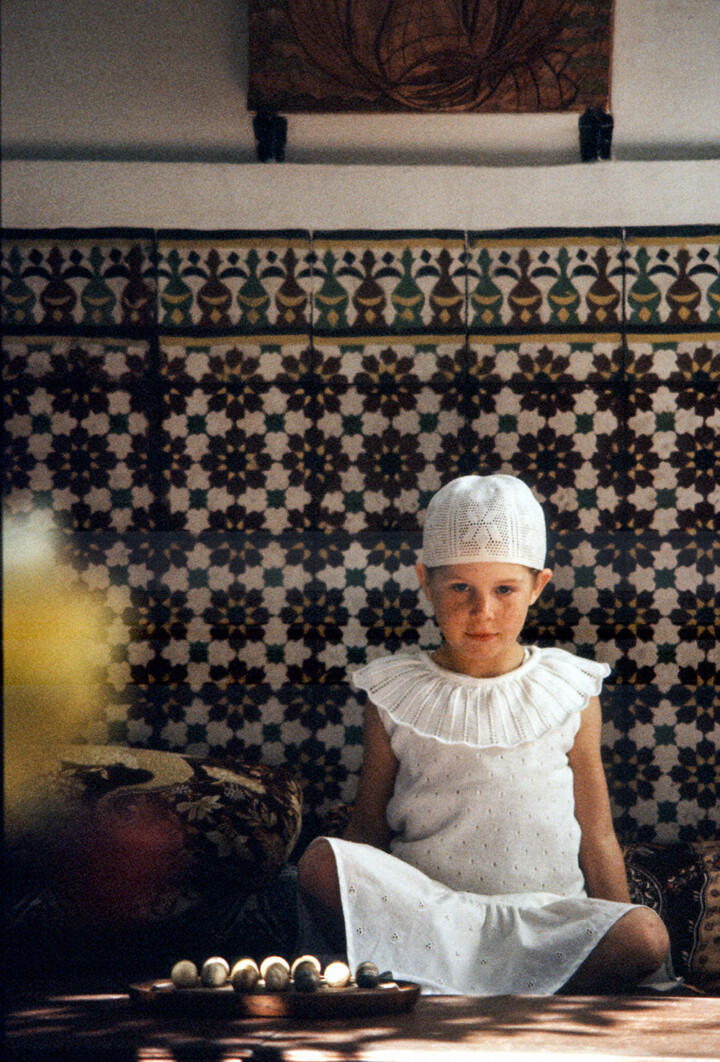
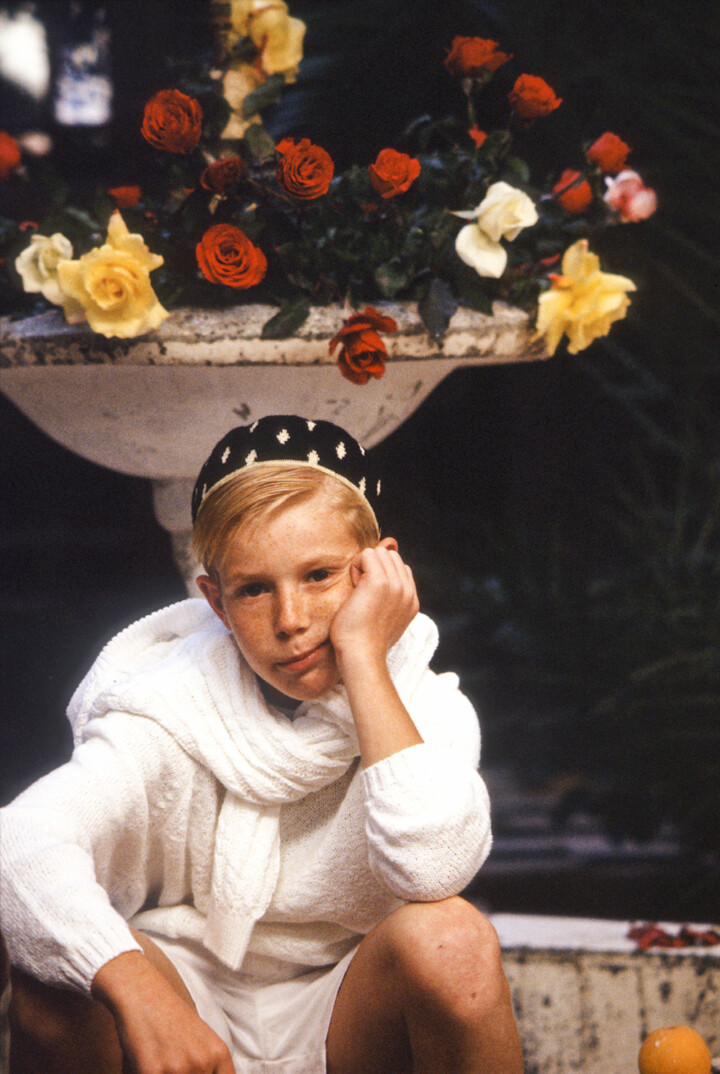
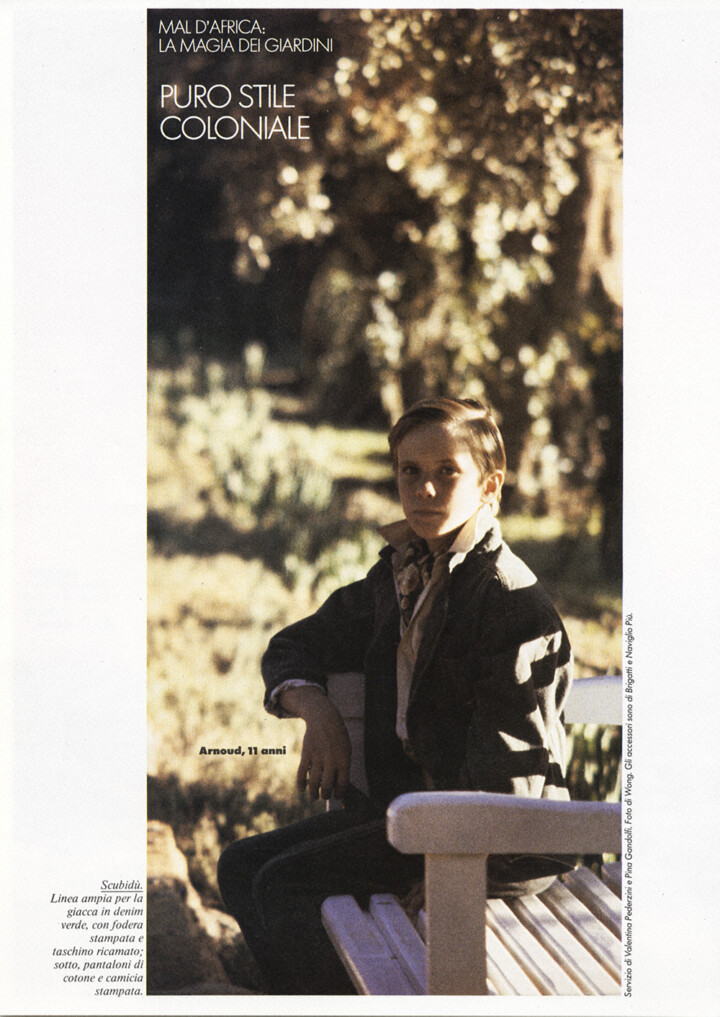
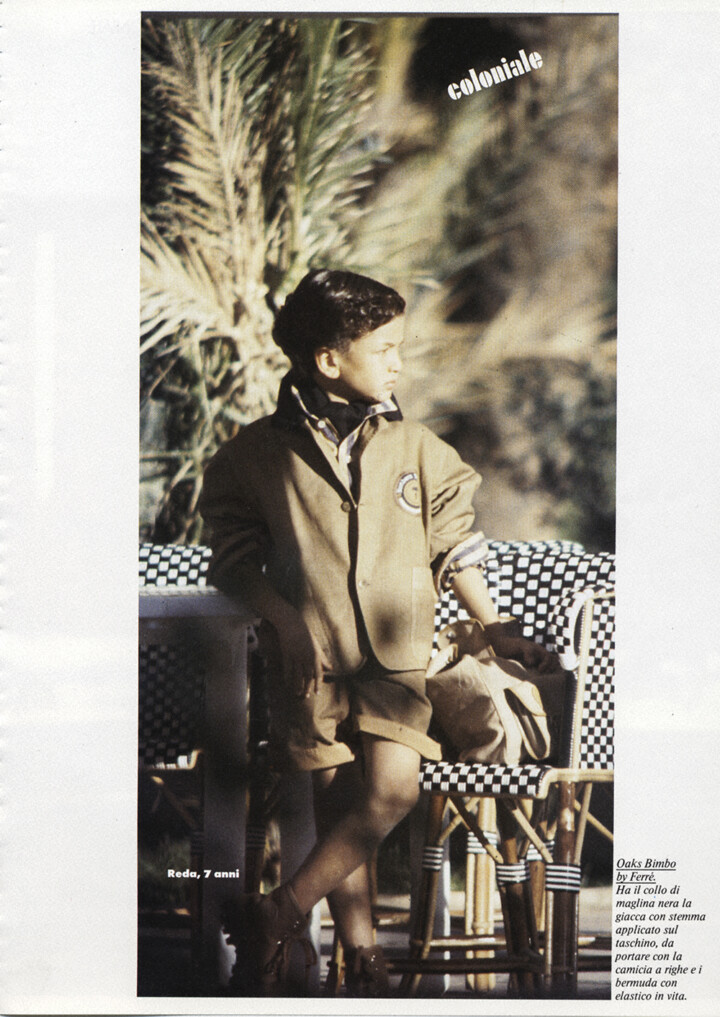
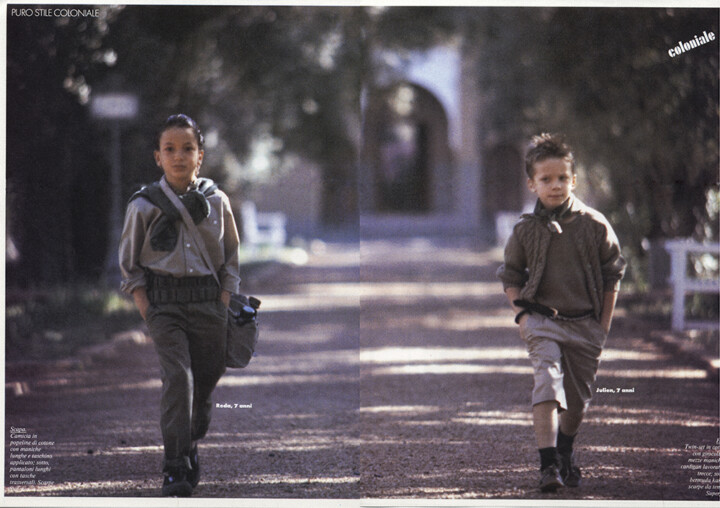
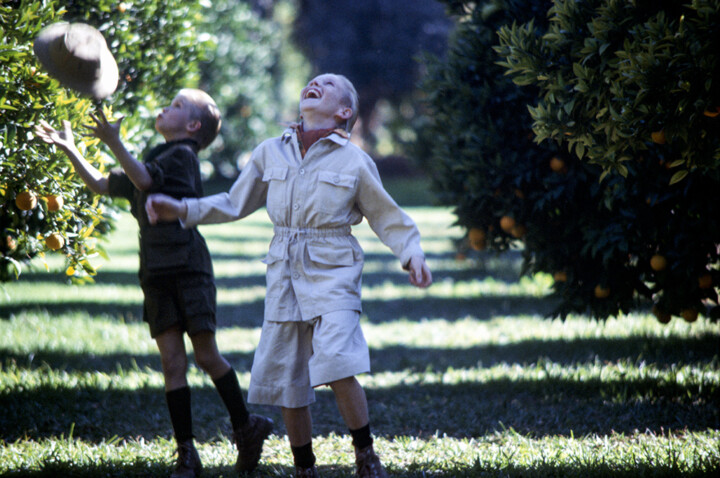
Going to Marrakesh, Morocco was interesting, for the country, the differences and the limitations. I went with Donna&Bambini, an Italian publication part of a major Italian publishing house at the same level as Conde Nast. We went as an Italian crew of stylists, editors and myself, to a French speaking country.
I had to learn the culture on the fly, and work on the sharp lighting of a place that was too hot to shoot during much of the day, and only small periods of time as the souk began opening (afternoon through evening) or intricate Moslem tilework indoors during the day. Working with the children of Morocco and French-Morocco, was gratifying, in dealing with their excitement, enthusiasm, their doubts, and my limited French.
Shooting editorial material on location is always a balance of content with location and safety. Getting the boy in a photo with a snake trainer and a cobra without endangering the boy in another language . . . was interesting, but only one of our adventures.


The Way to See Food
Phillip Wong Photography
Still Life
The Way to See Food
One of the threads that you’ll see through my work is an amazing stream of talented, special artists and artisans. I have always admired people who are driven to rise to unexpected levels, to produce uncommon work, and are passionate about their visions.
Often these people are esoteric, quirky, unusual or difficult, but it has given me the opportunity to see the work up close. I’ve worked with numerous chefs and companies in the food industry who fit this mold.
In the first group of images, I did a project with Food and Wine Magazine, at an annual awards event. It was designed as a food tasting featuring several restaurants, chefs, and iconic kitchens. Starting with the menu items which were being tasted at this showcase, I photographed some of the raw ingredients, creating a pattern which was printed on the table covering.
Tom Collicchio and Sisha Ortuzar’s Wichcraft, were using eggs and fish in a sandwich bite, so I focused on those items. Artisanal featured their cheeses, and I focused on the wide variety of shapes and tonal colors. Nobu was doing a carrot soup, and with Ballato, I focused on their freshly made pasta in shooting the shapes.


Some friends, Dave and Deb Pitula, had a place in Brooklyn but were expanding into catering events, and I wanted to shoot some of what they were producing at a wedding in New York. They’ve since moved out to Colorado and have the Whistling Boar, but these were some of the offerings they had at the New York wedding reception.
Capturing the texture, color, taste, look, smell and feel of food, is what makes an audience feel what they see, and why they have their cravings.


A City Dances - The Announcement
Phillip Wong Photography
Editorial/Opinion
A City Dances – The Announcement
Government is like everything else in life. It rests on a foundation of professionalism, organization, purpose and humanity. It has always been the way I see my own work, and am appalled at working with amateurs.
So while I analyze how, and why, and what is possible, seeing other people’s less analytical but more intuitive awareness gives me faith in our future.
In a society that often doesn’t make sense, it is inspirational to see the passage of knowledge, values and purpose from generation to generation.
New York sees things differently than many parts of America. It is a city comprised of people who think differently, who are physically separated from familial influences, and have both the ambition and determination to go their own mind.
And then there are those who are one or two generations in the city, but came through language, education and racial barriers or who’s immediate family experienced those barriers – and this makes them acutely aware. They are not only aware of differences, but exposed to them, and their focus is on the prize, not the distraction.
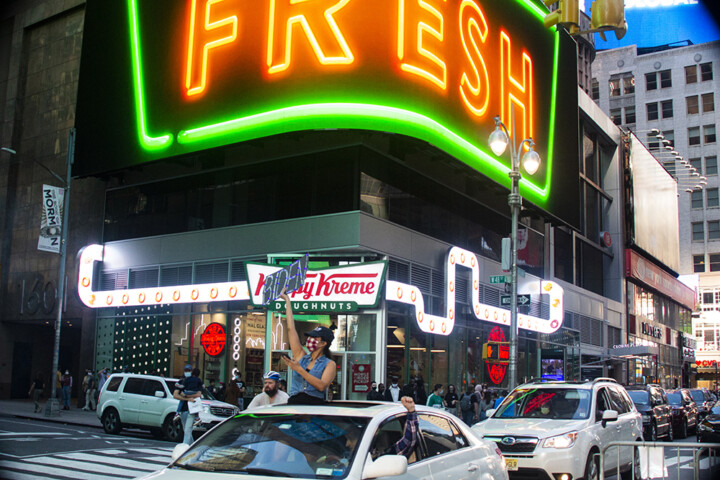
On the first day of early voting, lines wound around blocks multiple times, in various neighborhoods, Dominicans, Puerto Ricans, Haitians, were encouraging neighbors to vote, and in Brooklyn, food vans provided food to election workers.


I wanted to observe the cross-section of societies that were invested in the 2020 election, and their reaction to the election being called for Joe Biden.
When the election was announced, spontaneous groups flocked to Columbus Circle (in front of Trump Hotel), Union Square, Times Square, Barclay’s Center, Harlem’s 125th St. on foot, in cars, on bicycles, trains and buses. There were organized groups assembling as they marched to Times Square.
The joy and relief was palpable and rampant. While there was a police presence, large numbers of police just talked with an exuberant public


A City Reacts - After The Murder Of George Floyd
Phillip Wong Productions
Editorial/Opinion
A City Reacts: After The Murder Of George Floyd
I knew, after the murder of George Floyd, that there would be reaction.
In a world of seven billion people and a nation of 330 million, we often feel that our voice doesn’t matter. And if you are around thousands of other people, and hearing the same refrain over and over and over – you realize that there is a schism between what people see, hear, feel and experience – and what cloistered people in isolated offices understand.
It is like stepping in something, and experiencing the smell. You only can relate, if you’ve been there.
As I toured the city, in these groups of people, in the middle of a pandemic, with tension between police and people who were both irate, and trying to goad for reaction, there were officers, and civilians pushing to hold the line.
Maintain discipline, control tempers.
Officers were talking up discipline to cops, March Organizers were pushing back on marchers. Cops took off helmets to talk and hear complaints. I was struck by how many police were women and minorities. I wondered if they emptied out their academy and suspended off-days to display the diversity of their police force.
These were the people who have been there, seen it, heard it, experienced it – and their reactions.


COVID-19 Days that Plagued A City
Phillip Wong Photography
Editorial/Opinion
COVID-19: Days That Plagued A City
We are not passive spectators in this world. We are a part of it, it affects us, and it shapes our futures.
When we first began knowing about a coronavirus that was spreading throughout the world, it was already out. I had been shooting the New York Fashion Weeks shows in early February 2020, and standing pressed against photographers from Europe, Asia, Latin America and around the United States. In mid-February, I came down with a bad headache for a few days, which I rarely get, in later, in reflection, but without testing, I figured I had probably been infected.
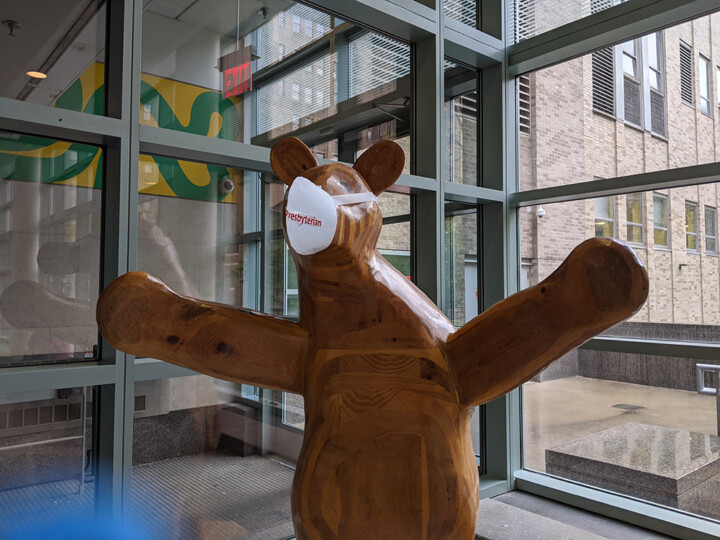
When the first case in New York was recorded, the patient was taken to New York Presbyterian Hospital for care, and for me, all work, jobs, projects came to a halt on March 10. Calls went out from New York’s governor for help in hospitals, and daily reports told us how rapidly the situation was developing.
At the end of March, I was asked to help organize and deliver food into a series of hospitals to feed hospital workers who had been coming in from around the country, put up in hotels in New Jersey, bussed in every morning at 6a to work 12 hour shifts. It went on for weeks, and then months, before finally getting under control. These people had no life. They worked, and slept. They had no place to buy food, no way to get anything, and this was one of the only ways they could survive.
Every meal time, someone was sent out of closed COVID units, with carts to pick up food and water for everyone inside each unit. They could only afford to send one or two people out, per meal – because they didn’t have enough Personal Protective Equipment (PPE).
The loading docks were swamped and chaotic because workers were getting sick, they were undermanned and didn’t have enough workers for 24 hours, seven days a week shifts.
Later, as the city and religious organizations, and restaurants, and private citizens began to create food banks to pack and distribute food for families, I was asked to help. This time, in the packing centers. 80 workers, working at minimum wage, packing 60-80,000 boxes a day, for distribution to churches, senior homes, nursing homes, neighborhood centers, pallet after pallet.
I took a few days off between these projects, and before the city came online, to photograph the city in lockdown.
This is the story, while some in a nation scoffed.


As It Develops - Our World
Phillip Wong Photography
Editorial/Opinion
As It Develops – Our World
I started out many years ago, as an investigative reporter. I learned on the fly, about Truth. How to tell the Truth, how to recognize the Truth, and how the Truth sometimes was the mortar between the cracks, rather than the bricks that everyone sees.
The newspaper that hired me, didn’t have a budget to have a photographer full time, and they gave me a camera – and while my investigations took forever (I thought), I began shooting spot news – hunting for stories, pitching stories, trying to persuade my editors to let me go.
Over time, I learned more about photography, drifted (through one of my investigations), into fashion photography, which is an industry I have thoughts about, but in this period of time, I recognized that some of the great issues of our time, that have been building since I began, have become important to document.
As a pandemic raged across the world, struck New York, I rushed into helping deliver food to hospital workers, but took a day off at the height of lockdown, to look at New York, and then when George Floyd was killed, the protests that followed, and then the election and the Announcement.
These are some of the moments.


A City Reacts: After The Murder of George Floyd


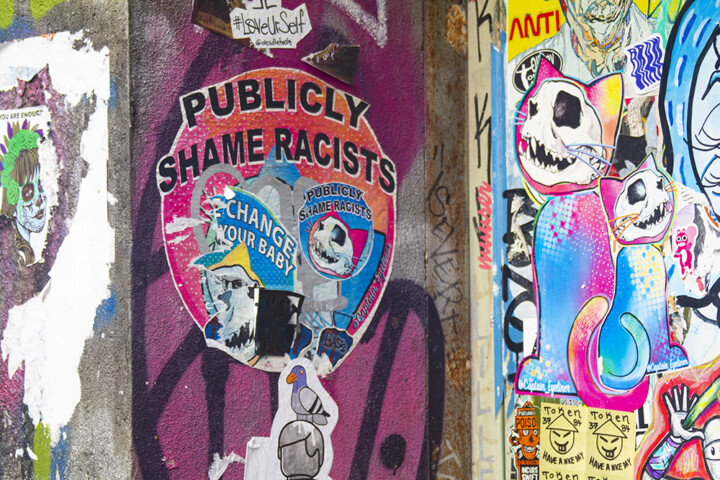


A City Dances: The Announcement